


Summary: "Grinding" is a trade term for a mechanical brushing finish, called mohúmáo (磨毛) in Chinese textile mills. It gives polyester a soft, sueded surface. This guide explains what a polyester grinding fabric roll is, how to read the 310 GSM / 170 cm / 85% polyester + 15% spandex specification, and which tests to run before you commit to bulk production.
What Is a Polyester Grinding Fabric Roll?
A grinding (brushed or sueded) finish is made by passing the fabric over abrasive rollers. The rollers lift and shorten the surface fibres, so a smooth, flat knit becomes a soft, matte surface with a warm hand-feel. The process changes the surface only. The yarn and knit structure underneath still determine strength, stretch and recovery.
The Polyester Grinding 310-170 from Zhejiang Wanjie Textile New Material Co., Ltd. combines polyester with spandex. The product page describes it as suitable for clothing and home textiles, and as easy to handle and machine-friendly for manufacturers. It is listed under the Sportwear Series.
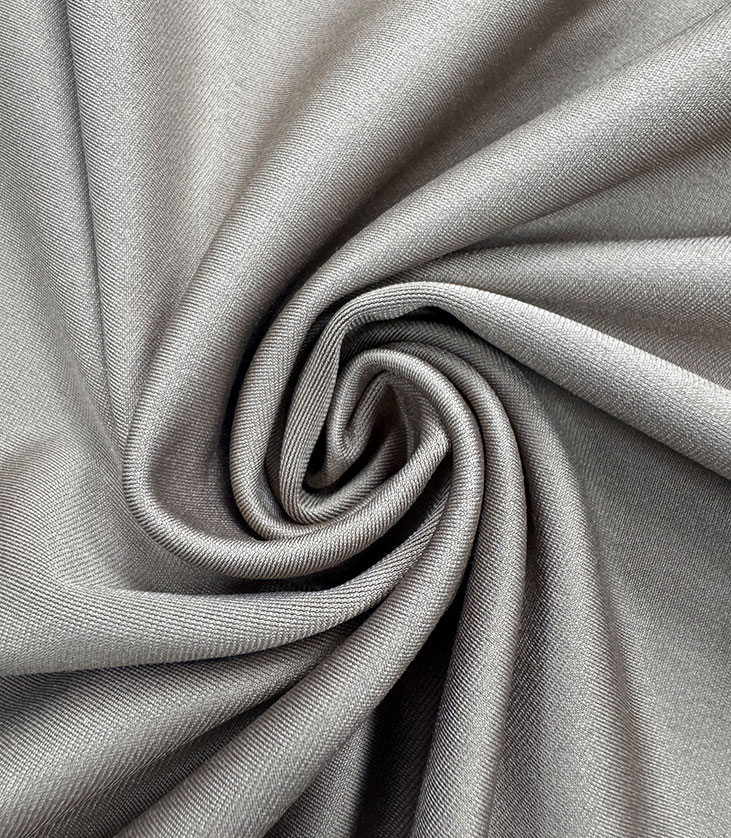
Specification at a Glance
The table lists the data published for this item. The "Practical meaning" column is our interpretation, not extra manufacturer data.
| Parameter | Published value | Practical meaning |
|---|---|---|
| Reference | JT32035-2 | Quote this code in inquiries and purchase orders to avoid mix-ups. |
| Weight | 310 GSM | About 9.1 oz/yd². This is a substantial, cold-weather weight rather than a light summer knit. |
| Width | 170 cm | About 67 in. Confirm whether this is the full width or the usable width after the selvedge. |
| Composition | 85% polyester + 15% spandex | Polyester provides durability and quick drying. Spandex provides stretch and shape recovery. |
| Customisation | Colour, weight and width | The page states that listed values are stock data and that custom requests are accepted. |
Why 310 GSM and 15% Spandex Matter
Weight and cutting efficiency
At 310 g/m² and 1.70 m wide, one linear metre weighs roughly 0.53 kg (0.31 × 1.7). One kilogram therefore gives about 1.9 linear metres. That figure helps when you compare quotes priced per kilogram with quotes priced per metre. It also gives a rough check on freight weight for a roll of a given length. Real values vary with finishing, so treat it as an estimate and confirm against the supplier's actual roll weight.
Spandex content and garment fit
A 15% spandex share is relatively high. It suits close-fitting garments and pieces that need to move with the body, and it helps the fabric spring back after wear. Fabrics with this much elastane can also behave differently in the factory:
- Relaxation: let the fabric rest, unrolled and tension-free, before cutting. Otherwise pieces can shrink back after sewing.
- Heat: spandex is sensitive to high temperature. Keep pressing and heat-setting within the supplier's recommended range.
- Sewing: use ballpoint or stretch needles and a stretch-appropriate stitch to avoid skipped stitches and seam puckering.
The trade-off of a brushed surface
Brushing improves softness, but loosened surface fibres can raise the risk of pilling (small fibre balls) in high-friction areas such as underarms, inner thighs and seat covers. Asking for pilling test results is therefore especially important for brushed fabrics.

Typical Applications
The product page names clothing and home textiles. Based on the fabric's weight and stretch, these uses are a reasonable fit:
- Activewear and athleisure: leggings, fitted jackets, warm-up layers and thermal base layers.
- Casual and fashion apparel: dresses, fitted tops and structured skirts that benefit from a matte, soft-touch look.
- Home textiles: stretch covers, cushions and soft furnishings, where abrasion and colour fastness need checking against the end-use.
If you are comparing finishes, the same site lists other families, including the Spandex Series, Velvet Series, Corduroy Series, Burnout Series and Mesh Series. The full product catalogue shows everything in one place.
How to Evaluate a Roll Before Bulk Ordering
Experienced sourcing teams rarely approve a fabric from a swatch alone. The table pairs each risk with a common test method and a decision point.
| What to check | Common method | Why it matters for brushed fabric |
|---|---|---|
| Pilling resistance | ISO 12945-2 (Martindale) or ASTM D3512 | Lifted surface fibres are the main pilling risk. |
| Abrasion resistance | ISO 12947 (Martindale abrasion) | Matters most for upholstery and high-wear garments. |
| Colour fastness to washing | ISO 105-C06 | Deep shades on polyester can bleed or fade if dyeing is poorly controlled. |
| Dimensional stability | ISO 6330 home laundering with ISO 5077 measurement | High-spandex knits can shrink or grow after washing. |
| Weight and width tolerance | Measure several points across and along the roll | Confirms that 310 GSM / 170 cm is consistent from roll to roll. |
| Shade consistency | Lab-dip approval and lot-to-lot comparison under standard lighting | A brushed surface changes how light reflects, so shade can differ from a flat swatch. |
Standards are published and maintained by bodies such as ISO and ASTM International. Always check the current edition of a method with your testing laboratory. If your customers require chemical-safety assurance, ask whether the fabric can be tested or certified to a scheme such as OEKO-TEX® STANDARD 100. Certification applies to specific products and suppliers, so request the certificate and verify its number on the issuer's website.
Care Guidance for End Users
Care instructions should always follow your garment's care label, which is typically written to the ISO 3758 symbol system or the equivalent local rules. These general practices help brushed polyester-spandex last longer:
- Wash inside out with similar colours at a moderate temperature.
- Avoid fabric softeners, which can coat elastic fibres and reduce moisture wicking.
- Avoid high-heat tumble drying and direct ironing on the brushed face.
- Skip hook-and-loop fasteners and rough zips against the fabric, since they snag the surface.
Customisation and Ordering
The product page says that colour, weight and width can be customised, and that the listed figures describe stock goods. It also invites buyers who have their own fabric target or need a supplier for a specific product to get in touch. To get an accurate quote, prepare these details:
- The reference code (JT32035-2) and your target end-use.
- Colour references, such as a Pantone code or a physical swatch.
- Required weight and width, plus the tolerance you can accept.
- Estimated quantity, delivery destination and the tests or certificates you need.
Ask for a sample or lab dip, and test it on your own cutting and sewing line before you place a bulk order. You can reach the team through the contact page.
About Wanjie Textile
Zhejiang Wanjie Textile New Material Co., Ltd. describes its work as redefining fabric innovation since 2007. Its catalogue spans sportswear, corduroy, velvet, burnout, spandex and mesh fabrics. To learn more about the company, visit the About Us page. For updates, see the News section and the Blog.
Related Polyester Products
If you are weighing finishes and weights, these items from the same catalogue are worth comparing:
- Polyester Satin 200-150 (JT32001)
- Polyester Satin 250-150 (JT32002)
- Polyester Semi-Bright 240-156 (JT32003)
- 50D Bright Polyester 215-152 (JT32006)
Frequently Asked Questions
Is "grinding" the same as brushing or sueding?
They are closely related. "Grinding" is the common English rendering of a mill term for abrasive-roller brushing. Suede-like and peach-skin effects come from similar mechanical finishing, with differences in intensity and fibre length.
Can I order a different colour, weight or width?
The product page states that colour, weight and width are customisable and that the listed data reflects stock. Minimum quantities and lead times are not published, so ask the team directly.
Is this fabric suitable for sportswear?
It is listed in the Sportwear Series, and its spandex content gives stretch and recovery. At 310 GSM it is heavy, so it suits cooler-weather or structured pieces better than ultra-light performance wear.
What should I test first?
Start with pilling, colour fastness to washing and dimensional change after laundering. These are the most common failure points for brushed, stretch polyester knits.


